

Illustration of the novel Don Quixote de La Mancha.
Don Quixote is undoubtedly the most important work in the Spanish language of all time. The way Miguel de Cervantes y Saavedra developed the plot and presented his critique of 15th-century Spanish society through the madness of his protagonist is, quite simply, masterful.
At first glance, we encounter a man driven mad by chivalric tales , setting out to defeat imaginary giants and rescue damsels who haven't asked for his help. But how much madness was there in Don Quixote? The truth is that what Cervantes sought, with what appears to be a simple story, was to expose the realities hidden behind the intricate human relationships of a unique era in Spanish history.
The madman from La Mancha or the excuse?
If Miguel de Cervantes y Saavedra excelled at anything , it was in his intelligence and sagacity when expressing himself with his pen. The madness of Don Quixote, then, was merely the excuse to unleash what he had kept bottled up after so many injustices he had witnessed and experienced, after so many battles, after so many instances of inequality, after existence itself.
Cervantes delves into the masks in his work, into the roles that each person must assume in this tragicomedy that is life . It is no coincidence that in one of the dialogues of the noble Don Quixote he expresses the following:
“One is the ruffian, another the liar, this is the merchant, that the soldier, another the simple discreet, another the simple lover; and when the comedy is over and stripping off her dresses, all the recitors remain the same ”.
His novel, then, is a clear mirror of the hypocrisy reigning in society—present, past, and future. The madman is nothing more than another ordinary character, another being who had to assume different roles until his time in the spotlight came to an end.
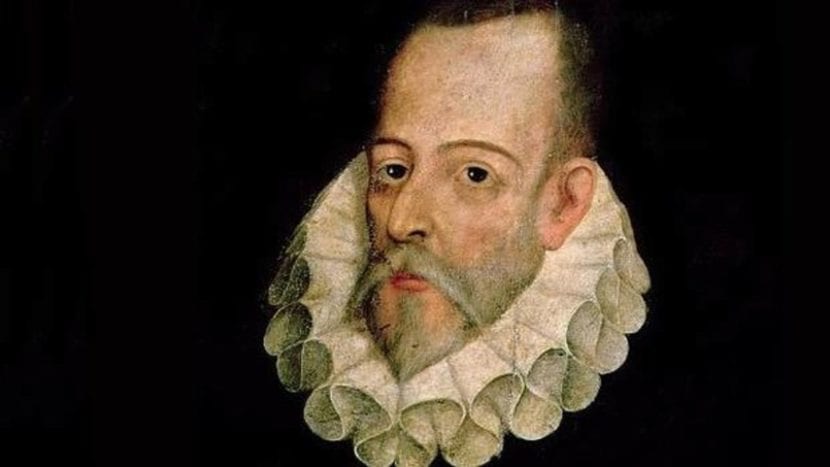
Portrait of Miguel de Cervantes y Saavedra.
The return of sanity
In the end, Alonso Quijano, after so much struggle against the monster that is human society, regained his sanity. However, we are talking about a lucidity that accepts everything when death is near, a state born from a long journey confronting both internal and external demons. Perhaps the most instructive aspect of all is that the protagonist exposes the everyday reality of being, that mirror we all see, but which many keep silent about.